18 recipes
A broad collection of dishes that reflects the spirit of the cooking lessons
Recipe collection
This page gathers the preparations that best express the atmosphere of the lessons, from bruschette and fresh pasta to sauces, side dishes and classic Italian desserts.
The collection is meant to feel practical and welcoming, much like the lessons themselves: rooted in seasonal ingredients, clear techniques and the pleasure of cooking for others.
18 recipes
A broad collection of dishes that reflects the spirit of the cooking lessons
4 chapters
Starters, handmade pasta, sauces, side dishes and classic Italian desserts
Tuscan style
Simple ingredients, practical techniques and convivial recipes guests can revisit at home
Inside the lesson
While the main Cooking Lessons page stays focused on the experience, menus and booking journey, this page gives more room to the dishes, ingredients and methods that shape the class.
It is a more in-depth editorial extension of the same world: generous food, hands-on learning and recipes that invite guests to keep cooking long after their time in Tuscany.
Fresh tomatoes, cannellini beans, salsa verde and sauteed vegetables shape a warm Tuscan welcome.
A practical chapter dedicated to fresh pasta, ravioli, gnocchi and the confidence that comes with hands-on work.
From Chianti-inspired meat sauces to vegetable salad and vinaigrette, the collection stays rooted in generous everyday flavors.
Tiramisu, panna cotta and chocolate-based desserts bring the sweeter side of the experience to the table.
Collection overview
The recipes are grouped to mirror the natural rhythm of a convivial Tuscan table, making the page easy to browse while still giving space to a richer body of content.
Starters
Fresh tomatoes, cannellini beans, salsa verde and sauteed vegetables shape a warm Tuscan welcome.
Handmade pasta
A practical chapter dedicated to fresh pasta, ravioli, gnocchi and the confidence that comes with hands-on work.
Sauces and sides
From Chianti-inspired meat sauces to vegetable salad and vinaigrette, the collection stays rooted in generous everyday flavors.
Desserts
Tiramisu, panna cotta and chocolate-based desserts bring the sweeter side of the experience to the table.
Starters
The opening chapter of the collection focuses on the kind of dishes that immediately feel Tuscan: toasted bread, vegetables, herbs, olive oil and straightforward flavor.
A rustic bruschetta built on toasted bread and a simple bean topping, finished with garlic, olive oil and rosemary.
Technique focus: Toast the bread until nicely crisp, combine the topping ingredients in a bowl, season well and finish with extra olive oil before serving.
A bright green Tuscan sauce that adds freshness and depth to tomatoes, bread and vegetable-based starters.
Technique focus: Blend the ingredients in short pulses so the sauce keeps texture rather than becoming too smooth, then use it as a vibrant finishing element.
A warmer bruschetta where aubergines become soft and savory, supported by onion, basil and cherry tomatoes.
Technique focus: Cook the onions first, add the aubergines and let them soften over high heat, then finish with basil and tomatoes before spooning onto toasted bread.
A classic version that keeps the focus on juicy tomatoes, basil, garlic and the fragrance of good olive oil.
Technique focus: Quarter the tomatoes, mix with the aromatics and olive oil, toast the bread on one side and spoon the mixture over while the slices are still warm.
Handmade pasta
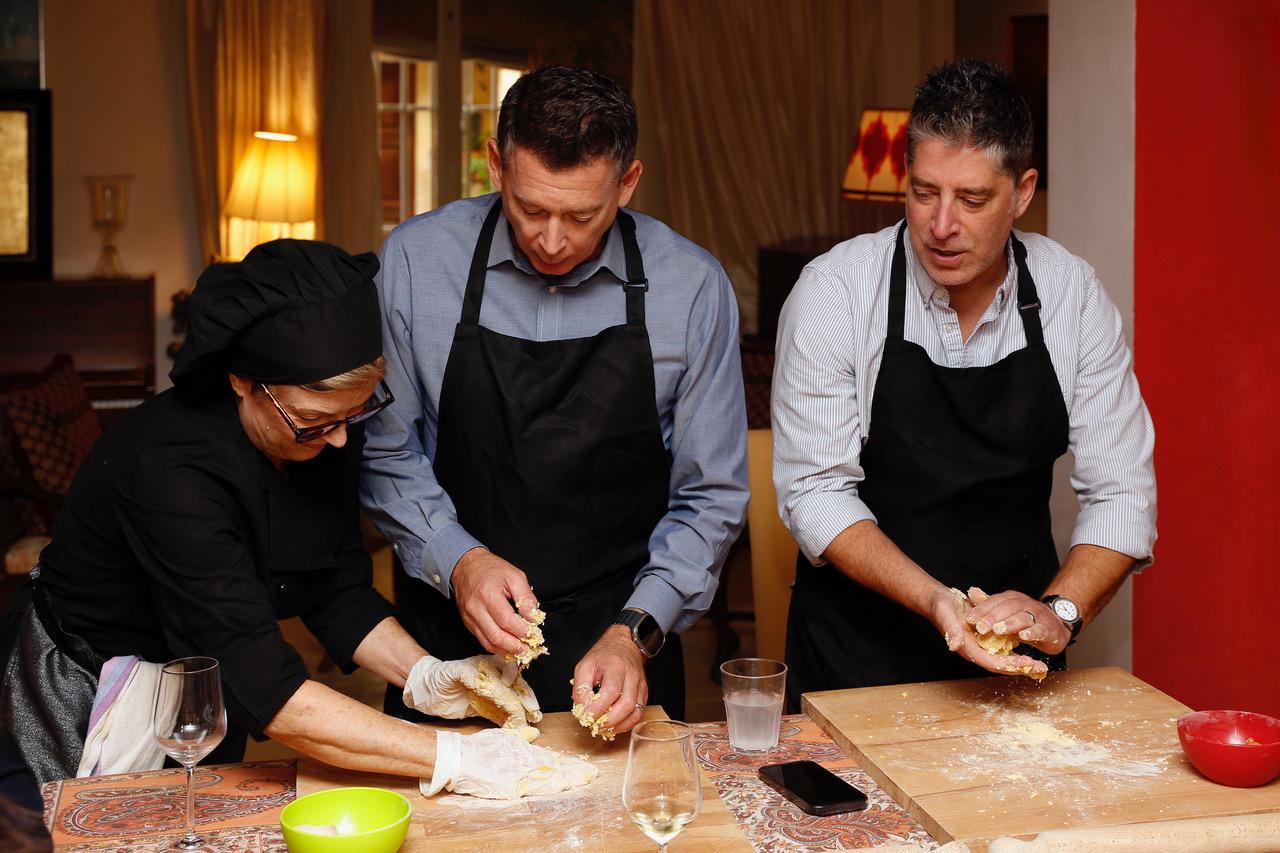
This chapter captures the tactile heart of the cooking lessons, where guests work with dough, shape pasta by hand and discover sauces rooted in Tuscan generosity.
The foundational dough for many of the handmade pasta preparations in the collection.
Technique focus: Form a well in the flour, work in the eggs gradually, knead until the dough becomes smooth and elastic, then let it rest well before rolling and shaping.
A filled pasta preparation shaped around fresh dough and a soft savory filling, then finished with an uncomplicated sauce.
Technique focus: Roll the dough into thin strips, place small portions of filling, seal with a second strip and cut into squares or rounds before cooking and dressing simply.
Soft potato gnocchi that balance comfort and technique, paired with a basil-based sauce.
Technique focus: Rice the warm potatoes, mix into a pliable dough without overworking it, shape into ropes, cut into small pieces and cook until the gnocchi rise to the surface.
A fragrant sauce used to dress gnocchi and other fresh pasta preparations.
Technique focus: Pulse the ingredients briefly to keep the sauce slightly textured rather than fully pureed, preserving freshness and body.
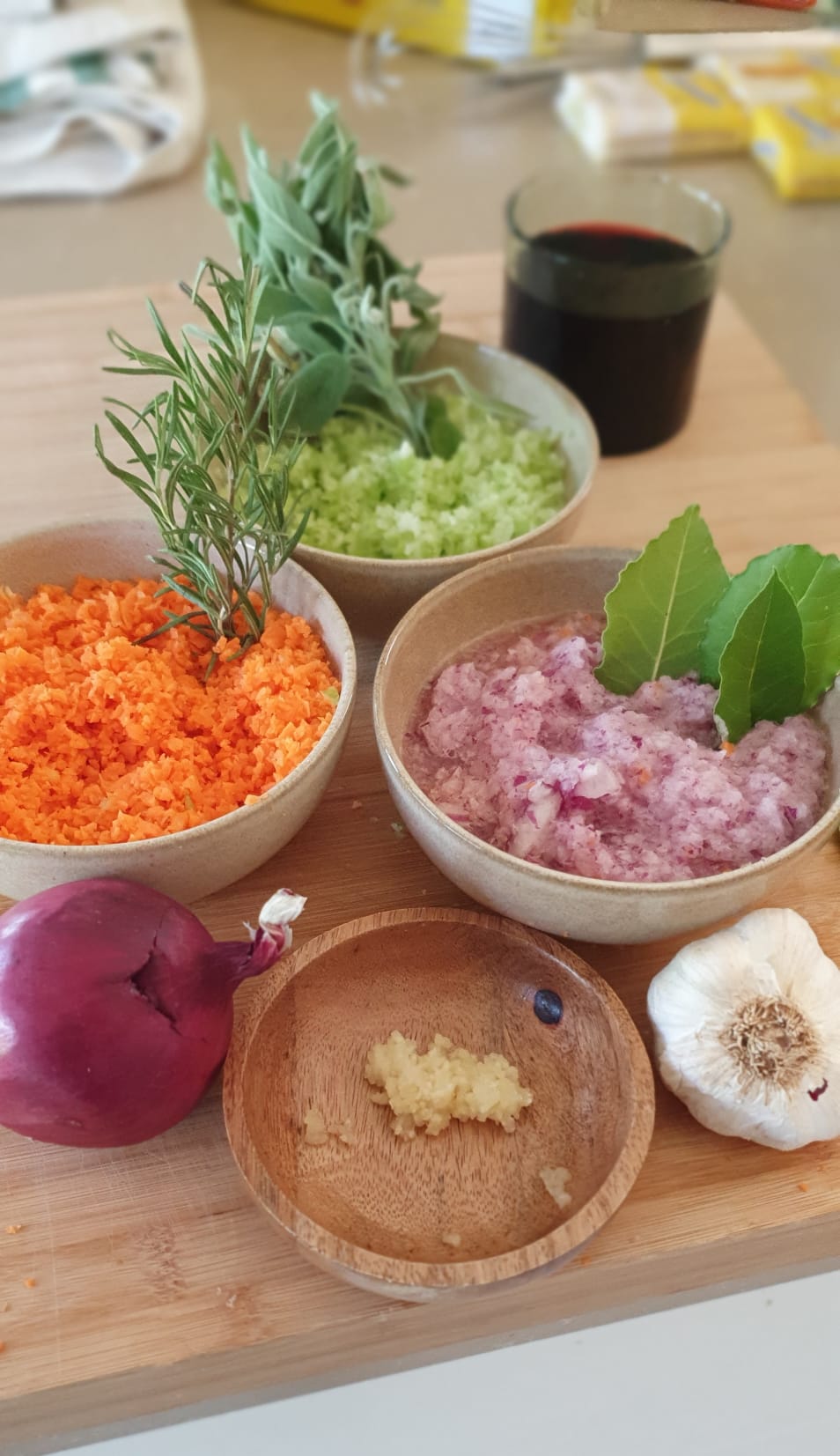
A rich meat sauce prepared with vegetables, herbs and tomato, ideal for generous pasta dishes.
Technique focus: Cook the vegetables until lightly golden, add the meat and break it up carefully, then stir in tomato and simmer gently so the sauce develops depth and softness.
A meat sauce inspired by Tuscan countryside cooking, enriched with herbs, red wine and a long, patient simmer.
Technique focus: Saute the vegetables and herbs, add the meat, let the wine reduce well and continue with a slow simmer so the sauce becomes full, rounded and deeply savory.
A vegetable-based sauce that keeps the collection balanced with lighter but still expressive flavor.
Technique focus: Cook the vegetables until softened, then simmer with tomato and aromatics until the sauce thickens into a bright, generous condiment for pasta.
Side dishes
The side preparations show how the lessons give importance not only to the main dish, but also to freshness, texture and balance at the table.
A crisp mixed salad designed to bring color, contrast and freshness alongside richer dishes.
Technique focus: Slice the vegetables with care so the salad keeps elegance and crunch, then dress just before serving.
A classic dressing that keeps the vegetable chapter clean, bright and flexible.
Technique focus: Whisk the vinegar first, then gradually incorporate the oil until emulsified, tasting and correcting the seasoning before finishing the salad.
Desserts
The final chapter turns to desserts that guests easily recognize and love, from classic tiramisu to spoon desserts and chocolate-based treats prepared for sharing.
A traditional tiramisu layered with coffee-soaked biscuits and a mascarpone cream finished with cocoa.
Technique focus: Prepare a light mascarpone cream with whipped whites, dip the biscuits in coffee, layer carefully and refrigerate well before finishing with cocoa.
A brighter variation that replaces the darker coffee profile with lemon fragrance and limoncello.
Technique focus: Follow the classic layered structure, but finish with citrus notes and lemon zest for a fresher, more aromatic dessert.
A spoon dessert with a soft coffee profile, mascarpone richness and chocolate biscuit texture.
Technique focus: Whip the cream with sugar, fold in the mascarpone, perfume with espresso and chill in small cups before topping with roughly cut biscuits.
A smoother, more elegant dessert finished with a fruit sauce that balances creaminess with brightness.
Technique focus: Infuse and thicken the cream gently, pour into ramekins, chill until set and finish with a softly cooked fruit sauce spooned on top.
A dense chocolate dessert shaped into a log, rich in cocoa and ideal for slicing and serving to the table.
Technique focus: Crush the cookies, mix with the remaining ingredients into a firm dough, shape into a roll and chill until compact enough to slice neatly.
Plan your lesson
The recipe collection offers a deeper look at the dishes and techniques, while the cooking lessons page remains the place to explore the experience itself, the menus and booking details.